The word "poly" does a lot of work in Pride culture, which is exactly why it causes so much confusion. In one conversation, it might mean polyamory, a relationship style built around consensual multiple relationships. In another, it might mean polysexuality, a sexual orientation based on attraction to multiple genders. The two words sound close enough to get mixed together, especially on Pride merch, social media tags, and search results, but they are not talking about the same thing.
That is why the polyamory flag is not always easy to identify at first glance. A search for "poly flag" can bring up a pink, green, and blue flag, an older blue, red, and black flag with a gold pi symbol, and a newer flag with a gold heart. They all seem connected until the meanings are separated. One belongs to polysexuality. Two belong to polyamory, but from different moments in the community's history.
So the real question is not just what the polyamory flag looks like. It is also why there are multiple versions, why the polysexual flag keeps getting pulled into the same search results, and which flag makes the most sense now.
Polyamory And Polysexuality Are Not The Same Thing
The first mix-up comes from the word itself. "Poly" means multiple, but multiple what? That missing word changes everything.
Polyamory is about relationships. It refers to having, wanting, or being open to more than one romantic or intimate relationship at the same time, with everyone involved aware and consenting. A person can be polyamorous and straight, gay, bisexual, pansexual, queer, asexual, or anything else. Polyamory does not describe who someone is attracted to by gender. It describes how love and relationships may be structured.
Polysexuality is about attraction. A polysexual person is attracted to multiple genders, though not necessarily all genders. That label says something about desire, not about whether someone wants one partner, several partners, marriage, casual dating, or no dating at all. A polysexual person can be monogamous. A polyamorous person does not have to be polysexual.
That is why the flags should not be used interchangeably. The pink, green, and blue flag commonly represents polysexuality. Pink is often tied to attraction to women, blue to attraction to men, and green to attraction to non-binary or gender-nonconforming people. It belongs to the language of sexual orientation, not the language of polyamorous relationships.
This is where a lot of people get tripped up. A flag can be labeled "poly" and still not mean polyamory. The shortcut is convenient, but it leaves out the most important part of the word.
Why There Is More Than One Polyamory Flag
Even after polysexuality is taken out of the picture, the polyamory flag still has more than one version. That is not because one is real and the other is fake. It is because the community has had an older symbol for years, and then a newer design became more popular as people wanted something that felt easier to recognize and more emotionally connected to the meaning of polyamory.
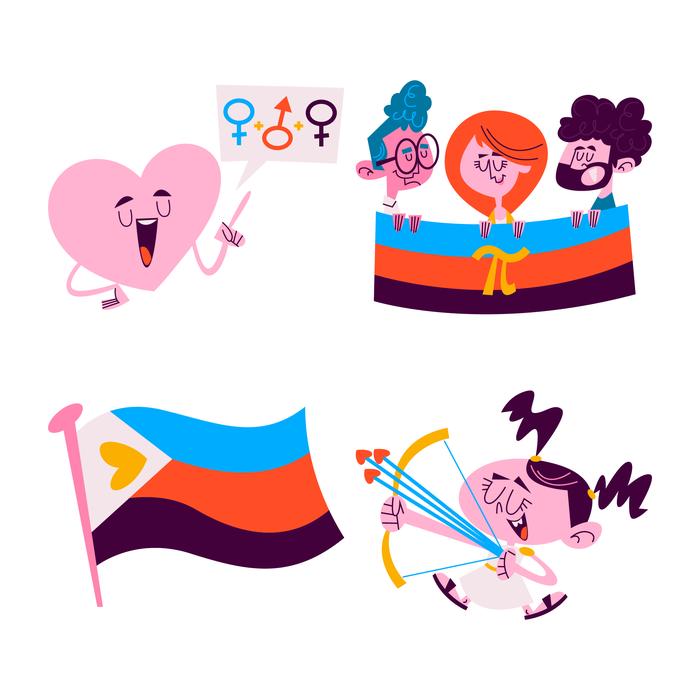
The older polyamory pride flag is blue, red, and black with a gold pi symbol in the center. It dates back to the 1990s and became one of the first widely recognized symbols for polyamory. For a long time, that was the design that appeared on educational pages, forums, old graphics, pins, and Pride-related merch.
The meaning behind the old flag is thoughtful. Blue is usually linked with openness and honesty between partners. Red represents love and passion. Black is often described as solidarity with people who cannot be open about their polyamorous relationships. The gold pi symbol was chosen as a nod to the "p" sound in polyamory, and the gold color has often been tied to emotional connection.
But even with that history, the old flag was never everyone's favorite. The pi symbol is clever once someone explains it, but Pride flags are not supposed to need a lecture before they make sense. To many people, the design felt cold, dated, or too much like a math reference. It carried meaning, but it did not always carry feeling.
That gap is what opened the door for redesigns. Polyamory already had a flag, but many people wanted one that felt more natural beside other Pride flags and more directly connected to love, relationships, and community.
The Newer Polyamory Pride Flag
The newer tricolor polyamory pride flag uses blue, magenta, and purple stripes, with a white triangle on the left and a gold heart inside it. It came out of a community redesign effort in 2022 and has become the version many people now use when they want a more current polyamory symbol.
The design is easier to read right away. The heart does not need much explanation. It points to love, care, intimacy, and connection, which makes sense for a flag about relationships. The colors also feel more at home in Pride spaces, where flags need to work on everything from parade banners to profile icons to small pins.
That does not mean the newer flag wiped out the older one. Community symbols rarely change that cleanly. People keep using the flag they first saw, the one their local group recognizes, the one they came out with, or the one that still feels meaningful to them. The old pi flag still has history. The newer heart flag has more modern visibility. Both can represent polyamory, but they carry different energy.
The old flag says, "This is where the symbol started." The newer flag says, "This is how many people want polyamory to be seen now."
So Which Polyamory Flag Is Correct?
The clearest answer is that the pink, green, and blue flag is not the polyamory flag. It is the polysexual flag, and it represents attraction to multiple genders.
The blue, red, and black flag with the gold pi symbol is the older polyamory flag. It is real, historically important, and still recognizable in many polyamory spaces, even if it no longer feels like the strongest visual choice for everyone.
The newer blue, magenta, and purple flag with the white triangle and gold heart is the modern polyamory pride flag many people now prefer. For someone looking for a current, easy-to-recognize polyamory flag, this is usually the better choice.
So the answer depends on what kind of "correct" matters. Historically correct? The pi flag has a real place. More current and easier to understand? The heart flag usually makes more sense. But if the flag is pink, green, and blue, it is pointing to polysexuality, not polyamory.
What The Polyamory Flag Is Really Trying To Say
The polyamory flag is not meant to explain every detail of someone's relationship life. It cannot show whether a person practices kitchen table polyamory, parallel polyamory, solo polyamory, hierarchical polyamory, or something that does not fit neatly under one label. It does not reveal how many partners someone has, what agreements exist, or what commitment looks like in that person's life.
What it can do is make polyamory visible. It gives people a way to recognize relationships that do not follow the usual monogamous script. It makes room for the idea that love, commitment, intimacy, and family can be built in more than one shape. That kind of visibility matters, especially in a culture where monogamy is still treated as the default and everything else is often misunderstood.
The polysexual flag has its own purpose. It gives visibility to attraction to multiple genders. That is a different message, and it deserves to stay distinct instead of being folded into polyamory just because the first four letters match.
The simplest way to keep the flags straight is this: polysexuality is about attraction, and its flag is pink, green, and blue. Polyamory is about consensual multiple relationships. Its older flag is blue, red, and black with a gold pi symbol, while its newer pride flag uses blue, magenta, purple, white, and a gold heart. The right flag depends on what is being represented: attraction to multiple genders, or the freedom to build love beyond monogamy.