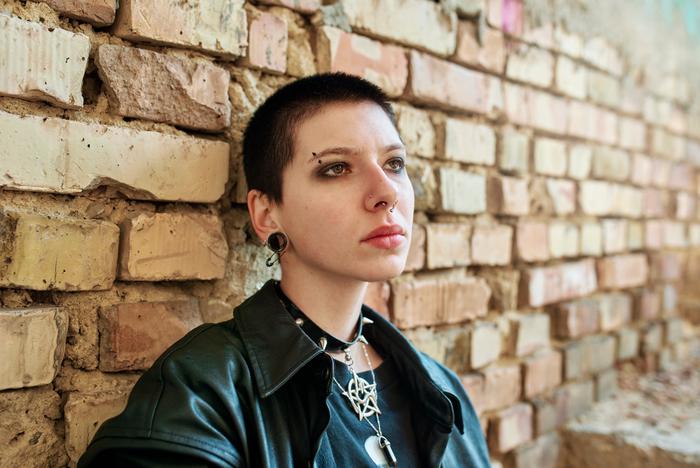
There are people whose look doesn't sit neatly on either side of masculine or feminine. A sharp haircut can come with soft features. A tailored suit can be paired with jewelry or makeup. Someone can have a traditionally masculine build and still dress in a way that feels delicate, playful, or just hard to place.
That mix is often described as androgynous. The word gets used a lot in fashion, dating, and conversations about gender, but it's also easy to read more into it than is actually there. Looking androgynous doesn't tell you who a person dates, what gender they identify as, or how they want other people to see them. Most of the time, it's simply a way to describe a look that mixes masculine and feminine elements.
Androgynous Doesn't Mean "No Gender"
Androgynous is sometimes treated as though it means removing anything masculine or feminine until a person looks completely neutral. That's not really how it works.
An androgynous look can actually have plenty of both. A woman might wear a loose button-down, cropped hair, and heavy boots while keeping makeup or jewelry that feels more feminine. A man might have long hair, softer clothes, painted nails, or delicate accessories without trying to present as a woman. What makes the look stand out is often the mix, not the removal of everything masculine or feminine.
There also isn't a clear line where an outfit suddenly becomes officially androgynous. The same oversized blazer can read differently depending on the haircut, face, body shape, styling, and the person wearing it. It's less about following a formula and more about not letting the usual rules of "men should look like this" and "women should look like that" control the whole look.
There Isn't One Androgynous Style
Short hair and suits are probably the easiest images to associate with androgyny, but stopping there makes the idea much narrower than it really is. Androgynous style can include wide-leg trousers, oversized T-shirts, structured jackets, skirts, boots, sneakers, fitted tops, loose silhouettes, jewelry, or makeup. Someone might lean heavily masculine one day and much softer the next while still having an overall look that people read as androgynous.
Body language plays into it too. The way someone carries themselves, moves, styles their hair, or combines different details can change how the whole look comes across. That's why two people can both be described as androgynous without looking anything alike. One might have a very clean, minimalist wardrobe, while another mixes traditionally masculine pieces with dramatic makeup and jewelry. Neither is more "correct" than the other.
Androgynous and Non-Binary Aren't the Same Thing
This is where the word often gets mixed up with gender identity. Androgynous is mostly about how someone looks or presents themselves, while non-binary is about how they identify their gender. A non-binary person doesn't identify exclusively as a man or a woman, while an androgynous person may identify as a man, a woman, non-binary, or something else entirely.
A cisgender woman can have an androgynous look and still feel completely comfortable identifying as a woman. A cisgender man can dress in a very androgynous way without questioning whether he is a man. A non-binary person can also look extremely feminine or masculine rather than androgynous. The same applies to terms like agender. Someone who is agender may not identify with gender at all, while androgyny says much more about how a person looks or presents themselves than how they understand their own gender. You usually can't work any of this out just by looking at a profile photo.
Why Androgynous Looks Can Be So Attractive
Attraction doesn't always follow the clean categories people use to describe it. One reason androgynous looks can stand out is the contrast. Soft facial features with a masculine haircut can create a very different impression from either feature on its own. A broad-shouldered person in delicate clothes can have the same effect. Masculine and feminine details can pull against each other in a way that makes the whole look harder to ignore.
There's also less predictability. When someone doesn't fit the usual masculine or feminine styling patterns, there isn't always an obvious category to put them in right away, which can make the whole look more noticeable.
That doesn't mean androgyny is automatically attractive, of course. Plenty of people strongly prefer very masculine or very feminine presentation. But for those who are drawn to androgynous people, the attraction often isn't about choosing between masculinity and femininity. The mix itself can be what works. Dating makes that especially obvious. A profile may catch your attention before you've even figured out what part of the person's look you like. Sometimes the haircut feels masculine, the face feels soft, the clothes sit somewhere in between, and the whole combination simply works.
Being Attracted to Androgyny Doesn't Automatically Redefine Your Sexuality
This is another place where people can start overthinking what attraction is supposed to mean. A straight woman can be attracted to a man with a feminine or androgynous appearance. A straight man can find a masculine-presenting woman attractive. Bisexual, gay, lesbian, pansexual, and queer people can obviously be drawn to androgynous styles too.
The way someone presents doesn't change their gender, and liking a particular look doesn't automatically change how you need to define your own sexuality. That becomes especially relevant in online dating, where photos come before most of the information you would normally learn through conversation. You can find a profile attractive without immediately knowing how that person identifies. Finding out later that their style is more masculine, feminine, or androgynous than you expected doesn't mean you need to turn one moment of attraction into a major identity question. Sexuality can be complicated, but not every attraction needs to become a test.
Looking Androgynous Doesn't Tell You Who They're Into
Looking androgynous really doesn't tell you much about who that person dates. An androgynous woman's appearance tells you almost nothing about who she's into, and the same is true for an androgynous man or a non-binary person. Clothing, hair, makeup, and body language aren't a substitute for asking how someone identifies or who they're interested in dating.
That sounds obvious when it's written out, but dating apps make snap judgments easy. A masculine-looking woman gets assumed to be lesbian. A feminine-looking man gets assumed to be gay. An androgynous profile gets assumed to belong to someone who is non-binary. Sometimes those guesses happen to be right, but appearance still isn't proof.
The easier approach is to let a profile tell you what the person has chosen to share. If gender identity, orientation, or pronouns matter to the conversation, those are things that can be learned from the actual person instead of being filled in from a haircut or outfit.
Androgyny Can Also Change Over Time
People don't always keep the same relationship with masculine and feminine presentation throughout their lives. Someone might have dressed very femininely for years and later feel more comfortable with shorter hair, looser clothing, or a more masculine silhouette. Another person may have spent years dressing in a traditionally masculine way and eventually start playing with makeup, jewelry, or clothing that once felt off-limits.
That change doesn't have to come with a new gender identity. Sometimes it's simply a person getting more comfortable with how they want to look. It can also move back and forth as style, confidence, work, relationships, and taste change over time. That's why the same person can look very androgynous in one photo and much more masculine or feminine in another without anything deeper necessarily changing.
Dating an Androgynous Person Doesn't Require a Different Rulebook
There can be a temptation to treat dating an androgynous person as though it requires a completely different set of social rules. Most of the time, it doesn't. If you find someone attractive, talk to them the way you would anyone else you're interested in. Use the gender and pronouns they give you rather than guessing. Compliments can focus on what you genuinely like about their look instead of turning their appearance into a curiosity.
There's a difference between saying, "That haircut looks amazing on you," and making someone explain why they don't look masculine or feminine enough for the category you expected them to fit. The same goes for questions about identity. If that information matters because a relationship is actually developing, there are natural ways for it to come up. Treating someone's appearance like a puzzle that needs to be solved before you can talk to them usually makes the interaction much stranger than it needs to be.
Attraction Doesn't Always Fit a Neat Box
Androgyny is useful as a word because it describes something people see all the time: masculinity and femininity don't always arrive separately. A look can borrow from both. A person can enjoy moving between them. Another person can be attracted to that combination without needing to turn the attraction into a larger statement about identity.
Once you stop trying to sort every look into masculine or feminine right away, it becomes easier to just notice what you actually like about the person. Sometimes you know you're attracted to them before you've figured out how you'd describe their look, and that's pretty normal.